SHOULD WE STOP TOUCHING WILDLIFE?
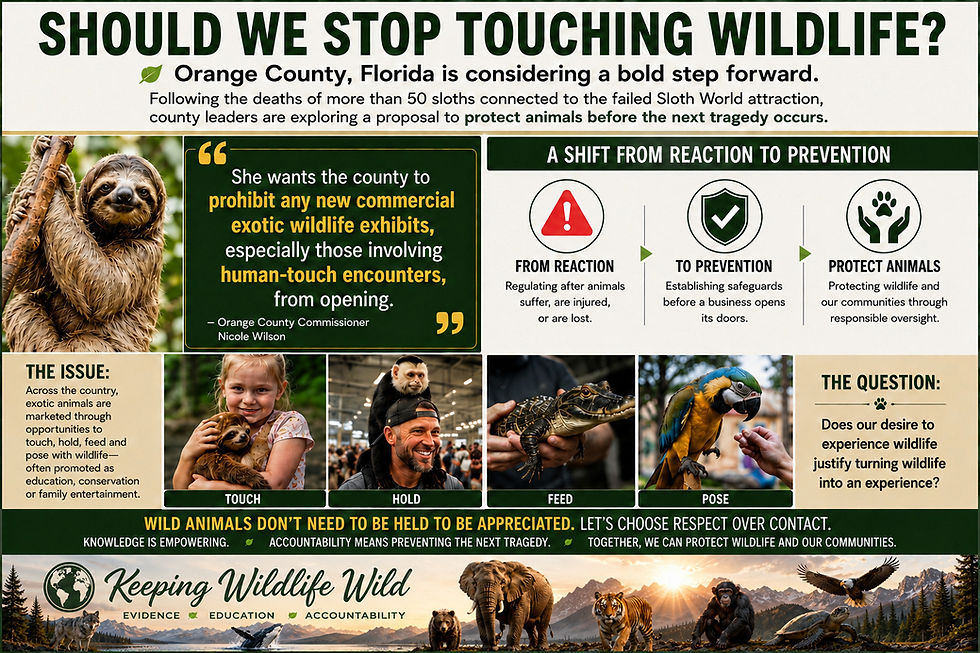
Orange County, Florida is considering preventing new commercial exotic wildlife exhibits—especially those involving human-touch encounters—from opening.
What if we stopped waiting for animals to suffer before taking action?
Following the deaths of more than 50 sloths connected to the failed Sloth World attraction in Orlando, Orange County leaders are considering something potentially significant:
Preventing new commercial exotic wildlife exhibits — particularly those involving direct human contact — from opening.
As reported by the Orlando Sentinel, Orange County Commissioner Nicole Wilson:
“wants the county to prohibit any new commercial exotic wildlife exhibits, especially those involving human-touch encounters, from opening.”
That matters far beyond one attraction.
Across the country, exotic animals are marketed through opportunities to touch, hold, feed and pose with wildlife — often promoted as education, conservation or simply family entertainment.
But perhaps we should be asking:
Does our desire to experience wildlife justify turning wildlife into an experience?
The Sloth World tragedy provides an opportunity to rethink how we protect animals — not simply by responding when something goes wrong, but by establishing safeguards before it happens.
From reaction to prevention.
From enforcement after the fact to safeguards before the fact.
From asking what went wrong to asking whether it should have been allowed to happen at all.
Wild animals don’t need to be held or turned into photo opportunities for us to appreciate them.
Sometimes accountability means preventing the next tragedy.
Knowledge is empowering.
Complete Article:
Florida county aims to slash exotic animal imports after Sloth World deaths
