top of page
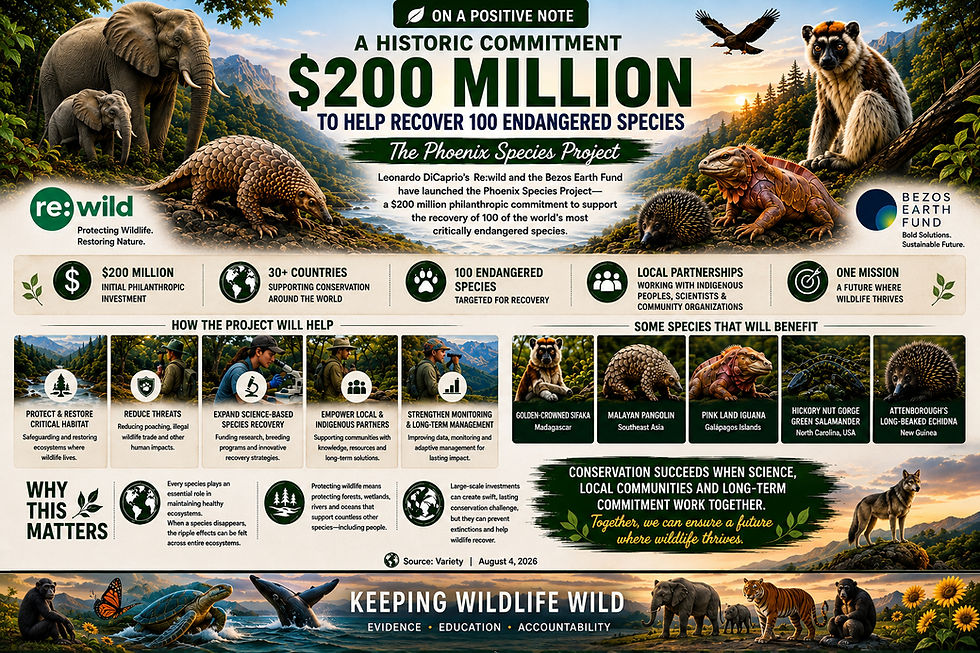
$200 MILLION COMMITMENT AIMS TO HELP RECOVER 100 ENDANGERED SPECIES
A major new conservation initiative was announced this week as Leonardo DiCaprio's Re:wild and the Bezos Earth Fund launched the Phoenix Species Project, backed by an initial $200 million commitment.
According to the organizations, the initiative is designed to help recover 100 of the world's most critically endangered species across more than 30 countries, making it the largest philanthropic commitment dedicated exclusively to endangered species recovery.
ㅤ
Rather than focusing on a single species or region, the project will support local conservation organizations, Indigenous communities, scientists and wildlife professionals working to:
ㅤ
• Protect and restore habitat
• Reduce threats from poaching and illegal wildlife trade
• Strengthen species recovery programs
• Improve long-term monitoring and conservation management
ㅤ
Among the species expected to benefit are the golden-crowned sifaka of Madagascar, the Malayan pangolin, the pink land iguana of the Galápagos, the Hickory Nut Gorge green salamander in North Carolina and Attenborough's long-beaked echidna in New Guinea.
ㅤ
Conservation challenges remain immense, but large-scale investments like this demonstrate that meaningful action is still possible when resources are directed toward science-based recovery efforts.
ㅤ
Every species saved represents more than preventing extinction—it helps preserve ecosystems that benefit wildlife and people alike.
ㅤ
Because keeping wildlife wild also means ensuring there is still wildlife left to protect.
ㅤ
Source: Variety, August 4, 2026.
ㅤ
Read the Complete Article
ㅤ
Related Reading:
“New Wild Cat Species from Bolivia: The Tilcayo”
Explore the discovery of a newly recognized wild cat species and what science is revealing about the diversity and evolutionary history of wildlife.
ㅤ
KeepingWildlifeWild.org
Evidence • Education • Accountability
How You Can Help:
Awareness is the first step toward meaningful change. Help advance evidence-based education, transparency and accountability by sharing this article with others.
Together, we can encourage a more informed conversation about the treatment and protection of wildlife.

bottom of page